Sailing to St. Martin: A Complete Guide for Cruisers
We arrived in St. Martin after an overnight sail from St. John, USVI, as part of our passage down the Eastern Caribbean. We originally planned to stay just a few days to recover from the Thorny Path and prepare for the next leg south.
However, we loved it here so much that we stayed for nearly three weeks! We have since returned multiple times, spending months here using St. Martin as a base to regroup, provision, and prepare for the rest of the season.
St. Martin quickly became one of our favorite stops in the Caribbean. Between the easy check-in process, well-stocked marine stores, incredible provisioning options, a welcoming cruising community and many dog-friendly places, it’s one of the best places for cruisers and live-aboard sailors to pause, reset, and prepare their boat before continuing down the island chain.
That said, arriving here for the first time can feel a bit overwhelming.
There are two countries on one island (French St. Martin and Dutch St. Maarten), multiple bridge schedules to navigate, different clearance procedures depending on where you check in, and a large, protected lagoon that has its own quirks to know about.
In this guide, I’ll walk you through everything you need to know about sailing St. Martin, including clearing in, entering Simpson Bay Lagoon, provisioning, marine services, places our dog loves to go, and the best things to do while you’re here.

Why Sailors Love St. Martin
St. Martin is one of the most popular stops for cruisers in the Caribbean, and after visiting 4 times and spending extended periods here, it doesn’t take long to understand why.
Most cruisers pass through St. Martin during the winter cruising season while heading south through the Eastern Caribbean.
Whether you’re heading south for hurricane season or just need a place to recover after a longer passage, St. Martin hits that sweet spot of being both practical and genuinely enjoyable to spend time in.
One of the biggest reasons sailors stop here is for the marine services. You’ll find multiple well-stocked marine stores, boat yards, and technicians here. It’s one of the easiest places in the Caribbean to get work done or track down parts you’ve been hunting for.
Another big perk is that the island is duty free, which means you can get shipments from Amazon or other businesses without paying extra duty fees on it. This has worked great for us on a couple of occasions now.
Provisioning is another huge win. From big stores like Carrefour and Cost U Less (my personal favorite!) in St. Maarten to the delicious French bakeries and Super U in St. Martin, you can find what you’re looking for here, often at more reasonable prices than other islands.
It’s an ideal place to stock up before moving along the island chain.
Beyond the practical side of things, the cruising community here is one of the best we’ve come across. Between the daily (and often funny) cruisers net, active WhatsApp and Facebook groups, organized events like weekly Dominos, and casual meetups at places like Lagoonies, it’s incredibly easy to meet people and get plugged in.
And when you’re not working on the boat or provisioning, there’s plenty to enjoy. Beaches, beach bars, and great restaurants are never far away, whether you’re on the French or Dutch side.
For a lot of cruisers, St. Martin ends up being more than just a quick stop. It’s the place where you pause for a bit, get your boat sorted, meet other sailors, and get ready for the next stretch up or down the island chain.
St. Martin vs. St. Maartin: What Sailors Need to Know
One of the most confusing parts about arriving here for the first time is that St. Martin and St. Maarten are actually two different countries that share the same island.
The French side is called St. Martin, while the Dutch side is St. Maarten. Together, they’re often referred to as SXM (also the airport code).
In practice, though, it doesn’t feel like two separate countries when you’re moving around the island. There’s no physical border, and you can easily travel back and forth between the two sides by dinghy, walking, bus, car, or taxi.
That said, there are a few key differences that matter for sailors.
The main differences are the currency and language. The French side uses euros and French is widely spoken (although English is widely spoken there too), while the Dutch side primarily uses US dollars and English is the main language.
The French side tends to feel quieter and more laid-back, with towns like Marigot, Grand Case, and Orient Bay, offering more of a local, European feel. It’s also where many cruisers choose to anchor as there are no anchoring fees on the French side.
The Dutch side, on the other hand, is busier and more developed, with larger marinas, more nightlife, and areas like Cole Bay and Philipsburg. Anchoring and clearance fees are required on the Dutch side, both inside and outside of Simpson Bay Lagoon.
For cruisers, you’ll likely end up using both sides regularly. You might clear in on one side, provision on the other, and move between them depending on where you’re anchored or what you need that day.
How to Clear Into St. Martin / St. Maarten
Clearing into St. Martin / St. Maarten is relatively straightforward, but the process is different depending on which side of the island you arrive on.
On the French side (St. Martin), clearing in has become incredibly simple. Everything is now done online through the official clearance website, so there’s no need to visit a physical office or use a computer kiosk like you may have had to in the past.
Unlike many other islands in the Eastern Caribbean, St. Martin does not use SailClear for check-in.
Once you complete the online form, you’ll receive your clearance paperwork electronically. Be sure to keep a copy accessible, either on your phone or printed, in case you need to show it.
Clearing into St. Maarten on the Dutch side has a more traditional process. You’ll need to visit the Customs and Immigration office, which is located near the Simpson Bay Bridge, to clear in and out.
It’s best to bring printed copies of your paperwork, as this is generally preferred over showing documents on your phone. We’ve used our phone before and they accepted it, but it was clear a printed copy would have been much easier, especially on a busy day.
If you plan to enter Simpson Bay Lagoon via the bridge, this is also where you’ll typically handle any associated bridge fees.
There are also clearance and cruising fees on the Dutch side, while clearing in on the French side is currently free.
Overall, most cruisers find the French side easier (and cheaper) for clearing in due to the fully online system, but you’ll likely interact with both sides during your stay depending on your plans.
Entering Simpson Bay Lagoon & Navigating the Bridges
If you plan to spend any time in St. Martin, there’s a good chance you’ll end up inside Simpson Bay Lagoon, one of the main hubs for cruisers on the island. It also offers great protection during large swells and high winds.
There are two main ways to enter the lagoon, depending on which side of the island you’re coming from: the Sandy Ground Bridge on the French side and the Simpson Bay Bridge on the Dutch side.
The Sandy Ground Bridge is a drawbridge located near Marigot. It opens twice daily, with outbound traffic first, followed by inbound traffic. This entrance is free to use, but it can be a bit more challenging depending on your boat.
The channel on the French side is narrower, shallower, and has a bridge width of about 30 feet. We’ve personally seen as little as 1 foot under our keel (we draw 5.5 feet and it was a bit nerve-racking!). Some catamarans can make it through, though it can be tight.
The Sandy Ground Bridge monitors VHF channel 16.

On the Dutch side, the Simpson Bay Bridge is wider, deeper, and generally easier to navigate, especially for larger boats. It opens multiple times per day, but each opening is for one direction of traffic only (either inbound or outbound).
The Dutch entrance tends to be much busier, with boats often gathering ahead of scheduled openings. Once the bridge opens, traffic moves quickly, so it’s important to be ready and paying attention.
There is also the Simpson Bay Causeway Bridge inside the lagoon, which connects the Dutch and French sides internally. This is a swing bridge that typically opens twice daily and allows traffic in both directions at the same time. If you plan to pass through, it’s a good idea to call ahead on the VHF, as it may not open if no vessels are expected.
When transiting any of the bridges, it’s standard practice to hail them on the VHF ahead of time, especially on the Dutch side.
The Simpson Bay Bridge and Causeway Bridge operators monitor VHF channel 12.

One thing to keep in mind is that the Simpson Bay Bridge often sees large yacht traffic, particularly during scheduled openings. It’s not unusual to find yourself waiting alongside mega yachts heading in or out of the lagoon, which can slow things down a bit, but is also pretty fun to watch.
If you’re on land, the bridge area near the Sint Maarten Yacht Club is a great place to watch the action.
Anchoring in St. Martin
St. Martin offers a variety of options for anchoring around the island, both inside Simpson Bay Lagoon and along the coast, depending on your preferences and weather conditions.
If it’s your first time visiting, many cruisers choose to anchor on the French side, particularly in Marigot Bay. This is usually our first stop when we arrive.
It’s free to anchor, easy to access after clearing in, and there’s plenty of space to find a good spot. From here, it’s also a easy dinghy ride to groceries, marine stores, fuel, and the lagoon.
Another favorite of ours is Grand Case, just north of Marigot. It’s an easy anchorage with a great beach, a fun floating bar, and a relaxed French coastal town feel. Mangaux loves his morning beach walks here! It’s also a great place to go ashore, whether that’s for the restaurants, shops, or just a nice walk through town.
If you’re looking for something a bit more remote, Île Tintamarre is a popular day stop. It’s an uninhabited island with a beautiful beach and good snorkeling, and there are free mooring balls available. It can get quite rolly, depending on conditions, so many cruisers prefer to visit for the day rather than stay overnight.

Inside Simpson Bay Lagoon, you’ll find very protected anchoring with no swell. This can be a great option if you want easy access to marine stores, restaurants, and services. Everything is accessible by dinghy, although some rides can be a bit longer depending on where you anchor.
On the Dutch side, anchorages like Simpson Bay have fees and may be more exposed to swell. We’ve found boats there can get quite rolly depending on conditions, which is something to keep in mind when choosing where to stay.
Overall, where you anchor in St. Martin will depend on your priorities, whether that’s convenience, protection, or being close to town. We’ve anchored in all of these spots except Simpson Bay, and each has its own pros depending on what you’re looking for.
Provisioning in St. Martin
Provisioning in St. Martin is one of the big reasons cruisers choose to spend time here. Compared to many other islands in the Eastern Caribbean, the variety, availability, and prices here are hard to beat.
On the Dutch side, one of the best places to stock up is Cost U Less, which is similar to Costco but without the membership fee. It’s a great spot for buying in bulk at more reasonable prices, especially for a major provisioning run. Right across the street is a large and well-stocked Carrefour, so it’s easy to hit both in one trip.
These stores are located near Philipsburg and aren’t within walking distance from the main anchorages, but there is typically a cruiser shuttle during peak season (usually on Fridays) that makes it easy to get there for around $6 per person round trip.
Closer to Simpson Bay, you’ll find several options within walking distance. Market Garden is a popular stop, especially for American products that can be harder to find elsewhere. It’s well stocked and convenient, although prices are noticeably higher. There’s also Green’s Market and another Carrefour nearby, both easy to reach from the dinghy docks.

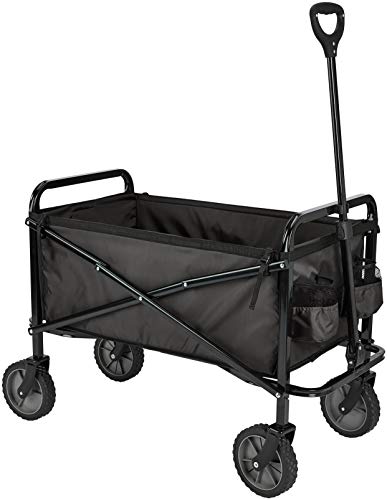
This has been one of the biggest game changers for us when provisioning in St. Martin. Between long walks, heavy bags, and trips back to the dinghy, it saves a ton of effort.
Instead of making multiple trips or struggling with heavy bags, we just load everything into a collapsible wagon and roll it straight back to the dinghy.
We used this one until we ran it into the ground:
On the French side, provisioning has a slightly different feel. Smaller stores like CADIS Market are perfect for quick stops for fresh baguettes, produce, and a few essentials. For larger shops, Super U in Marigot is a great option within walking distance of the dinghy dock, and there’s an even larger Super U about a mile from Grand Case.
Overall, we’ve found that grocery prices in St. Martin are more reasonable than most other Eastern Caribbean islands, with the exception of other French islands like Martinique and Guadeloupe, where prices are about the same. There’s also a wider variety of products available in St. Maarten, including many U.S. items that can be hard to find elsewhere.
Another big difference is consistency. Unlike some islands where stores frequently run low on stock, we’ve found that St. Martin tends to be well supplied, making it a reliable place to provision before continuing up or down the island chain.
Marine Stores and Boat Work in St. Martin
Another big reason cruisers stop in St. Martin is for access to marine stores, parts, and skilled boat work. It’s one of the best places in the Eastern Caribbean to fix issues, upgrade systems, or stock up before continuing down the island chain.
On the Dutch side, the two main marine stores are Island Water World and Budget Marine. Both are well stocked and easy to access by dinghy. We’ve generally found Budget Marine to have slightly better pricing, although we usually end up checking both if we’re trying to track something specific down.
Our dog, Mangaux, loves Island Water World and has been known to get treats there, but he is welcome in both Island Water World and Budget Marine.
There is also a smaller Island Water World and Île Marine on the French side, which can be convenient depending on where you’re anchored, especially if you don’t feel like making the trip across the lagoon.
Not strictly a marine store, but definitely worth mentioning, is the ACE Mega Center on the Dutch side, walkable from Lagoonies.
The ground floor is a large hardware store, and the second floor is stocked with home goods. We’ve found ourselves there more than once picking up random things for the boat we didn’t even realize we needed.
When it comes to boat work in St. Martin, the island has a strong reputation across the cruising community. There are a number of highly skilled technicians and companies on the island covering everything from rigging to electrical work and solar installations.
For rigging, FKG is one of the most well-known and trusted options in the Eastern Caribbean, and we’ve had a great experience working with them so far.
For electrical work and solar, NOMAD is frequently recommended among cruisers, and it’s a name that comes up often in the local community.
There are also multiple boat yards on the Dutch side for haul outs and repairs, with different options depending on your boat and needs. On the French side, yards typically use cranes rather than lifts, which is something to be aware of when deciding where to haul out.
Another big advantage of St. Martin is how easy it is to ship parts and supplies to the island. Services like West Tech Shipping are great for larger or heavier items, while Business Point is a popular option for smaller packages and quicker deliveries. We’ve used both depending on what we needed and how quickly we needed it.
Another small but important thing to note is propane refills. We’ve used Propane King in Cole Bay, which is within walking distance of Budget Marine, and found it to be quick and easy to get same-day service. There are also options to drop off your tank at places like Island Water World and pick it up later, but we’ve found it just as easy to walk it over and have it filled the same day.
Overall, if you need parts, repairs, or upgrades, St. Martin is one of the most convenient and reliable places in the Caribbean to get work done.
Getting Around St. Maarten
Getting around St. Maarten and the rest of the island is fairly straightforward once you get a feel for how things work. It’s especially easy when arriving by boat and using the dinghy docks around Simpson Bay or Marigot. This is one reason we love coming here each year.
Most of the time, we get around by dinghy and walking to nearby restaurants, grocery stores, and marine stores. For larger provisioning trips, the cruiser shuttle is one of the easiest options, especially for runs to Cost U Less and Carrefour.
Buses are a great low-cost way to get to places like Maho Beach or Orient Bay, although they can take a bit of getting used to since there aren’t always clearly marked stops. We’ve taken buses to both and found them a fun way to get around.
For longer trips, or airport runs with a lot of luggage, taxis are the most practical option. And if you want to explore more of the island, renting a car gives you the most flexibility, especially when friends or family are visiting.Overall, getting around St. Maarten becomes much easier once you figure out which option works best for what you need, whether that’s quick errands, provisioning runs, or exploring different parts of the island.
Things to Do in St. Martin for Sailors
While St. Martin is incredibly practical for provisioning and boat work, it’s also a really fun place to spend time off the boat.
A lot of our time here ends up being a mix of simple things, like beach outings (hello Sunday Funday!), meeting up with other cruisers, going out for a good meal, or just getting off the boat for a walk with Mangaux after a productive day.
There are plenty of great beaches around the island. Spots like Maho Beach, Kim Sha Beach, and Orient Bay are all easy to get to and worth checking out, depending on which side of the island you’re on.

One of our favorite things to do in St. Martin is head up to Fort Louis in Marigot. It’s a short but steep walk, and the views over Marigot Bay are well worth it, especially around sunset.

The cruising community here is a big part of what makes St. Martin so enjoyable. Between the daily cruisers net, organized events, and casual meetups, it’s easy to get involved. We’ve joined in on things like Sunday dominos and other get-togethers, and it’s a great way to meet people and swap stories.

Happy hour is also a bit of a staple here. Places like Lagoonies and the Soggy Dollar are popular cruiser spots to grab a drink and wind down at the end of the day.
And let’s not forget eating out at many great restaurants in St. Martin. With a mix of French and Dutch influence, there’s no shortage of great restaurants across the island, especially in places like Grand Case and Marigot.
Sailing with a Dog in St. Martin
If you’re sailing with a dog, St. Martin is one of the easiest and most enjoyable stops in the Caribbean.
One of the biggest things we noticed right away is how dog-friendly the island is compared to other places we’ve been. Unlike some of the French islands where dogs aren’t allowed on beaches, we’ve found St. Martin to be much more relaxed.
Mangaux has been able to join us almost everywhere, from beach days to restaurants and even into places like Island Water World and Budget Marine. It makes a huge difference when you don’t have to constantly plan around where your dog is allowed to go.
There are also plenty of great spots to get your dog off the boat. In Marigot, there are areas along the waterfront that are good for walks, and in Grand Case there’s a soccer field nearby that’s perfect for letting them stretch their legs.

If you are staying in the Lagoon, there is an entire island, locally known as “Explorer Island”, where your dog can roam around and adventure. The island even has a small floating dinghy dock you can use. Just be sure to keep an eye on your dog as there are resident goats, chickens, iguanas and a cat who live on the island.
One of Mangaux’s favorite spots is Lagoonies, where he’s made a few local dog friends and gets to run around while we grab a drink. We also take him to Kim Sha Beach, where he loves to lounge in the shade under the beach chairs.
Overall, we’ve found St. Martin to be one of the most dog-friendly stops we’ve experienced while sailing in the Caribbean with a dog, and it’s a place where traveling with a dog feels easy.
Is St. Martin Worth It for Cruisers? (Why We Keep Coming Back)
After multiple visits and spending extended time here, St. Martin has become one of our favorite stops in the Caribbean. It feels like a “home base” for us along with Grenada.
It’s one of those places that just makes cruising life easier. Between the access to marine stores, reliable boat work, and some of the best provisioning in the Eastern Caribbean, it’s a place where you can reset, fix what needs fixing, and stock up before continuing on.
But what keeps us coming back isn’t just the practical side of things.
It’s the balance St. Martin offers. You can spend the morning working on the boat, the afternoon provisioning or running errands, and still make it to the beach or meet up with other cruisers for happy hour by the end of the day.
There’s also a strong sense of community here. Whether it’s the cruisers net, casual meetups, or just running into familiar boats around the anchorage, it’s easy to feel connected and settled, even if you only planned to stay a few days.
For us, St. Martin has never been just a quick stop. It’s a place we plan for, return to, and end up staying longer than expected almost every time. If you’re planning your own stop here, this guide covers the essentials, including including clearing into St. Maarten, Simpson Bay Lagoon bridge information, provisioning, anchoring, and getting around St. Maarten, to help you make the most of your time in St. Martin.
Articles Related to Sailing in St. Martin / St. Maarten
- Sailing to St. Martin: A Complete Guide for Cruisers
- Clearing Into St. Maarten by Boat: Customs, Fees and What to Expect for Both Sides
- How to Get Around in St. Maarten
- Entering Simpson Bay Lagoon: Bridges, Fees and What to Expect
- Anchoring in St. Martin: Best Spots & Tips for Cruisers
- Grocery Stores in St. Martin: A Complete Shopping Guide
Want to download our Pre-Departure Checklist?
Get the Pre-Departure Checklist before your next passage.
Take the stress out of your departures with this editable pre-departure checklist.

