The Mona Passage: Proven Tips for a Safe Crossing
The Mona Passage has a reputation for its strong currents and funneling winds. If you are planning your sailing trip to the Caribbean along the Thorny Path from the Dominican Republic, USA or the Bahamas, then you’ll find yourself crossing the Mona Passage.
The Mona Passage, also known as el canal de la mona in Spanish, is an approximately 80-mile wide stretch of water between the Dominican Republic and Puerto Rico.
We crossed the Mona Passage from Samana Bay, Dominican Republic to Puerto Real, Puerto Rico on our way to the Caribbean in our sailboat, Pelagia. Scott, a US Coast Guard Veteran, has patrolled the Mona Passage days on end during his time in the Coast Guard, and has a wealth of knowledge on its unique challenges.
In this article, we will discuss the best routes for crossing the Mona Passage, what to consider in your passage planning for this area, tips for a safe and comfortable crossing, and helpful arrival information when you get to Puerto Rico.
Whether it’s your first crossing, or you are looking for helpful tips for a smoother passage on your next crossing, then keep reading to learn more about the fickle Mona Passage.
And, before you make your crossing, check out this Pre-Departure Checklist we use for each passage.

Planning Your Route Across the Mona Passage
There are two main routes across the Mona Passage from the Dominican Republic to Puerto Rico. The “northern route” over the north side of hourglass shoals, and the “southern” route under the southside of hourglass shoals.
The hourglass shoal is an area of relatively shallow water off of the east coast of the Dominican Republic. It’s not a shoal you will run aground at, as it is still approximately 150 to 550 feet (45-168 meters) deep. However, the water around it drastically drops off to approximately 1,500 feet (457 meters) and greater!
So what makes the hourglass shoal a place to avoid? The equatorial current! The equatorial current runs through this area in a generally east to west direction and can create large waves as it steps up on the shoal.
This is definitely an area we try to avoid as the waves can become a bit unpredictable and large.
Note: Map is for demonstration purposes only, and not to scale. Please refer to proper navigational charts for your planning purposes.
The Northern Route
We chose to do the northern route over hourglass shoal to cross the Mona Passage.
We arrived in Puerto Plata, Dominican Republic from the Bahamas. From there we waited for a good weather window, and sailed at night along the north coast to Samana Bay to stage for our Mona Passage Crossing.
From Samana Bay, we sailed along the coastline until we reached La Vacama area, then veered off north of hourglass shoal and across the Mona Passage to Puerto Real, Puerto Rico.
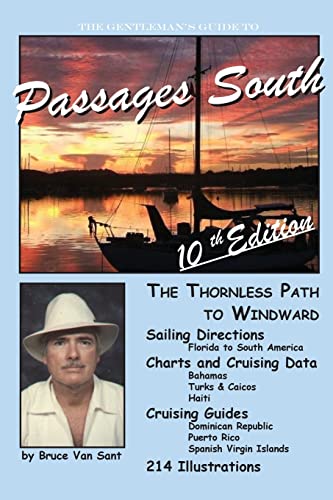
Before sailing this route, we read the book “Passages South” by Bruce Van Sant. I highly recommend this book for detailed information all along the Thorny Path, or “thornless path” as he calls it, from Florida, United States all the way down to South America. He also includes cruiser guides for the sailing in the Dominican Republic and Puerto Rico which we found to be helpful.
The Southern Route
Another option is to sail underneath the hourglass shoal by following the Dominican Republic coastline until you reach Punta Cana. From there you can veer off into the Mona Passage and avoid the hourglass shoal to the north of you.
This route will take you right next to Mona Island, or Isla de Mona. If the conditions are calm enough, and you have enough time in your weather window, you can choose to anchor here to break up the passage.
Considerations in Your Passage Planning Across the Mona Passage
The top things to consider in planning your passage across the Mona Passage include:
- Weather
- Currents
- Night Lees along the coast of the Dominican Republic
- Afternoon thunderstorms along the west coast of Puerto Rico
The Weather
The biggest thing to consider when crossing the Mona Passage is the weather!
This is true for all passage planning that you do, including going across the Gulf Stream, but due diligence prior to crossing the Mona Passage is critical in order to ensure a safe passage.
I have heard of sailors who crossed over the hourglass shoal with no problems. And I have heard of sailors who turned around and headed back to the Dominican Republic because the conditions were that bad!
Tip: One thing we like to do is use multiple weather sources to see if they are predicting the same thing.
The top three weather resources, two which require subscriptions and one is free, we checked for crossing the Mona Passage were:

When looking for a good weather window, we are looking at a combination of wind speed, wave height and direction and swell height, direction and period.
During our crossing, we experienced winds 5-12 knots out of the ESE and then ENE with 2-3 foot seas and 3-4 foot swells. These conditions made for a relatively calm and comfortable passage.

The Currents
The Atlantic North Equatorial Current runs generally east to west along the northern coast of the greater antilles islands, including Puerto Rico and the Dominican Republic.
The Caribbean Current also runs generally east to west along the Caribbean Islands, including along the south of Puerto Rico and the Dominican Republic.
The Mona Passage, the area between the Dominican Republic and Puerto Rico, can become affected by the currents running along the north and south ends of it. The currents can swirl off into the Mona Passage, creating a confused sea state and less than ideal conditions.
Tip: The Trade Winds run along this area, blowing consistently out of the east. We aimed for days with lighter winds as we knew we would be going into them to get across the Mona Passage.
Night Lees
As Bruce Van Sant explains in better detail in his book, Passages South, a night lee is a calming of the winds along a coastline at night. Land cools faster than the nearby deep water, creating an effect which lifts or deflects the trade winds.
What does this mean? The winds will tend to die down at night, making a night sail a more pleasurable passage. This is especially the case along the north coast of the Dominican Republic. When we sailed from Puerto Plata east to Samana Bay, we left in the late afternoon and arrived in Samana Bay the next morning. During this time, we had lighter winds and thus a more enjoyable passage, relatively speaking, when sailing into the trade winds.
Tip: Track the weather conditions at night when sailing along the north coast of the Dominican Republic for opportunities to move east.
Thunderstorms
When crossing the Mona Passage, another thing to consider are the afternoon thunderstorms that roll off of the west coast of Puerto Rico. It’s no fun running into strong storms at the end of your passage.
Having lived on the gulf coast of Mississippi and Alabama for the past 20 years, we are no strangers to the daily afternoon thunderstorms.
In Puerto Rico, the consistent trade winds push humid air from the Atlantic Ocean over the land. As the trade winds and humid air encounter the mountainous terrain of Puerto Rico, air is forced to quickly rise and cool off, condensing into clouds.
During the daytime, the land continues to heat up, causing the warm air to rise and eventually mix with the clouds above, driving thunderstorm activities. These thunderstorms drift off over sea and into the Mona Passage, sometimes up to 30 miles offshore.
Tip: Plan your arrival into Puerto Rico for the morning hours to avoid the afternoon thunderstorms.

Tips for a Safe and Comfortable Passage Across the Mona Passage
Our trip from Samana Bay, Dominican Republic across the Mona Passage to Puerto Real, Puerto Rico, took us one day to cover 144 nautical miles.
We left at approximately 7:00 AM and arrived at approximately 7:00 AM the next morning. This allowed us to leave and arrive in daylight hours, and avoid the afternoon thunderstorms in Puerto Rico. This also allowed us to see a ton of whales in Samana Bay!
Some tips we followed for a safe and comfortable passage include:
- Safety: We make sure to have our life jackets handy with their tether lines attached, jacklines on deck, and Garmin inReach turned on with an active subscription. We also secure all items above and below deck.
- Weather: We patiently waited for a weather window with lighter winds and wave heights at a comfortable-to-us height.
- Food Prep: On longer passages such as this one, I like to prepare food ahead of time that is easy to eat in potentially rolly conditions. I also aim for foods with protein, and bland and salty food, as I tend to get prone to seasickness in really rolly seas. I also like to make coffee ahead of time to keep in a thermos for overnight passages. Foods I like to eat underway include:
- Chex Mix
- Popcorn
- Plain noodles (good cold if you can’t heat them up)
- Tuna packets with crackers
- Cold pasta salad with chicken and vegetables I have on hand (prepared ahead of time)
- Hourly Checks: Each hour, we like to check in on our engine, bilge area, shaft packing (we check the dripping frequency to make sure it is still dripping and staying cool), and temperature in our electrical compartment. We also document our location, direction and speed, wind direction and speed, and swell and wave direction and speed.

Arrival into Puerto Rico
After you have the Mona Passage behind you, you will need to prepare for arrival into Puerto Rico. The good news (at least for fellow Americans) is that it is all completed online using the CBP Roam App.
When we arrived in Puerto Rico, we made our notification through the app, and they requested an online video chat with us. We called in and they asked to see us on video alongside our passports.
They did ask if we were traveling with a dog, which we were, and asked if we had all of our documents for him (which we did). We got no further questions about bringing our dog to Puerto Rico.
We anchored in Puerto Real for a few days, then moved down to Boquerón, before continuing on our Thorny Path passage. We found Puerto Real and Boquerón to be great spots to rest and recover from our overnight sail.

FAQs about the Mona Passage
How deep is the Mona Passage?
The Mona Passage ranges from 1,300 to 1,600 feet (400 to 500 meters) and connects the Atlantic Ocean to the Caribbean Sea.
Why are the hourglass shoals dangerous?
The hourglass shoals are a relatively shallow area surrounded by deep water. The energy from the equatorial current can cause steep waves to get pushed up on the shoals creating hazardous conditions.
Is the Mona Passage dangerous?
The Mona Passage can be dangerous if you are not planning your passage for lighter winds and calmer waves. The currents running north and south of the Mona Passage combined with the trade winds can create unpredictable sea conditions.
What is the best weather for crossing the Mona Passage?
The best weather for crossing the Mona Passage are calm winds and lessened sea state conditions. It is best to track the weather prior to your crossing to get an understanding of weather trends in the area and only cross in conditions that you are comfortable with.
Get Ready to Cross the Mona Passage
With diligent planning and weather tracking, you can have a safe and comfortable passage across the Mona Passage.
Use this Pre-Departure Checklist to help you stay organized before you cross.
Know your route and the length of time you expect it to take, before you leave.
Only go out in weather conditions that you will be comfortable with, knowing that conditions can change and get worse.
Plan around the afternoon thunderstorms in Puerto Rico by shooting for a morning arrival.
Enjoy Puerto Rico and the Caribbean! We loved sailing the south coast of Puerto Rico and completing our Thorny Path once we arrived in St. Martin.
Have you crossed the Mona Passage? Are you getting ready to cross? We would love to hear from you and hear about your experiences!
Check out this article to learn more about Passage Planning.
Learn More Sailing Tips Here:
- PredictWind Review: Pros, Cons & Real Use at Sea
- 12 Essential Subscriptions Used When Boating as Full-Time Sailors
- Favorite Weather Apps For Sailing: Discover The Best Features
- Crossing The Gulf Stream: 4 Proven Tips From A Coast Guard Veteran
- Sail Route Planning: How To Have A Safe And Successful Passage With These 6 Key Elements
- Sailing at Night: Top 10 Tips in the Helpful Guide
- Sailing with a Dog: Practical Guide for Cruisers
- Sailing with a Dog in the Caribbean: Ruff Times?
- 10 Things to Know about Cooking on a Sailboat
